
2023年10月4日17時45分(斯德哥爾摩時間2023年10月4日11時45分),2023年度諾貝爾化學獎獲獎名單公佈,獲獎者為:Moungi Bawendi、Louis Brus和 Alexei Ekimov,他們因「量子點的發現和合成」而獲獎。
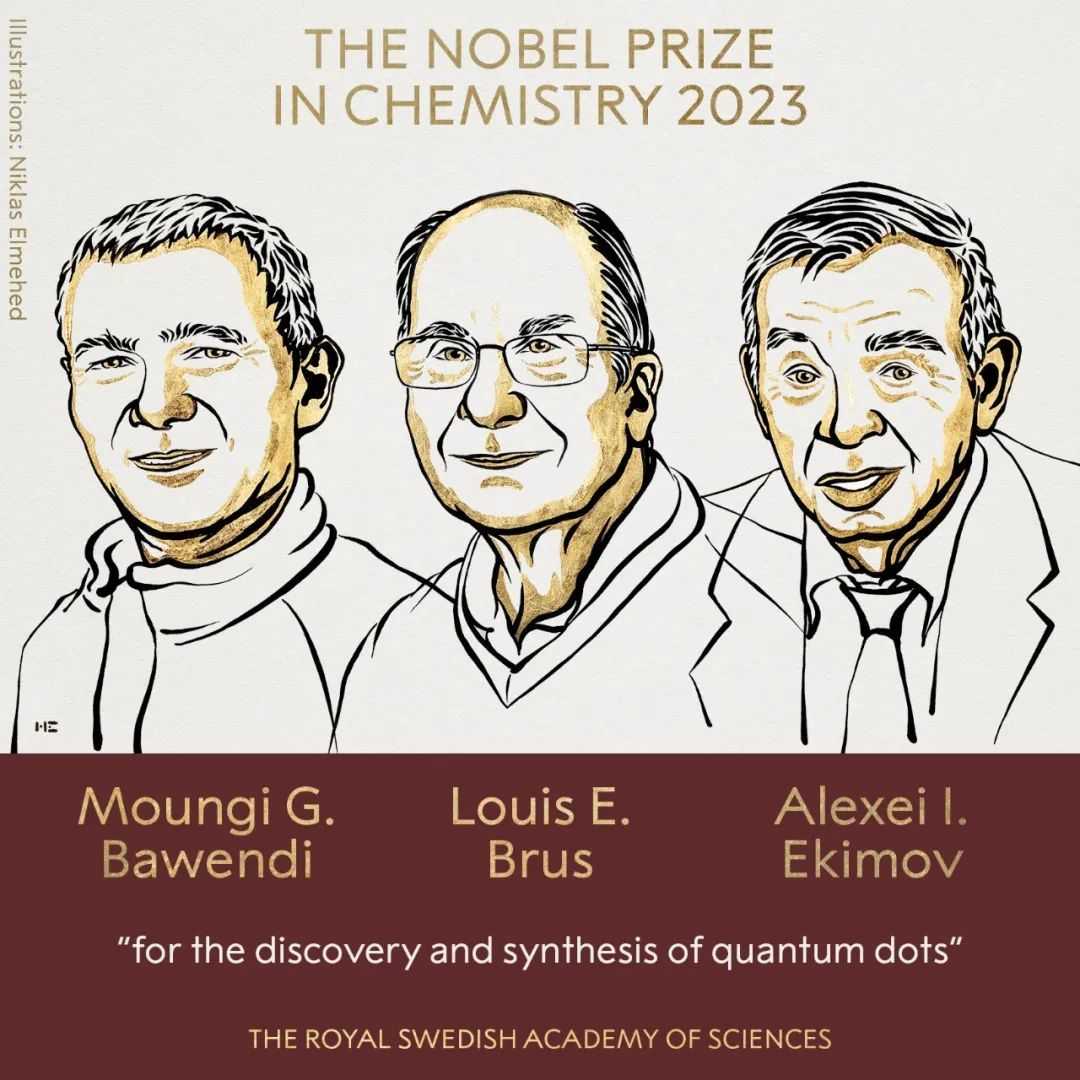
獲獎者簡介
Moungi G. Bawendi
突尼西亞裔美國化學家
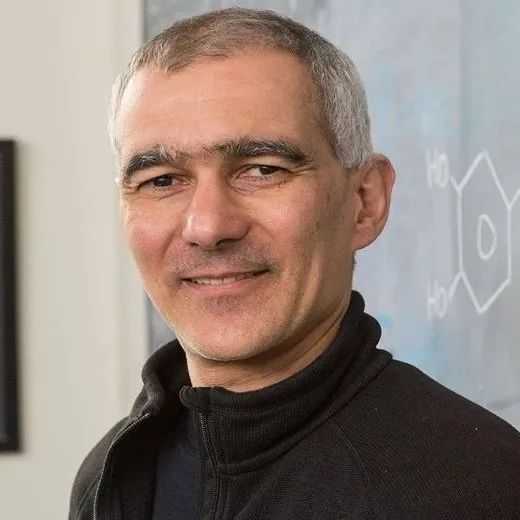
突尼西亞裔美國化學家,麻省理工學院 (MIT) 教授。1961 年出生於法國巴黎。1988年獲得美國伊利諾伊州芝加哥大學博士學位。Bawendi 是膠體量子點研究領域的最早參與者之一,也是過去十年被引用最多的化學家之一。他於 2020 年成為科睿唯安引文桂冠獲得者。
Louis E. Brus
美國化學家
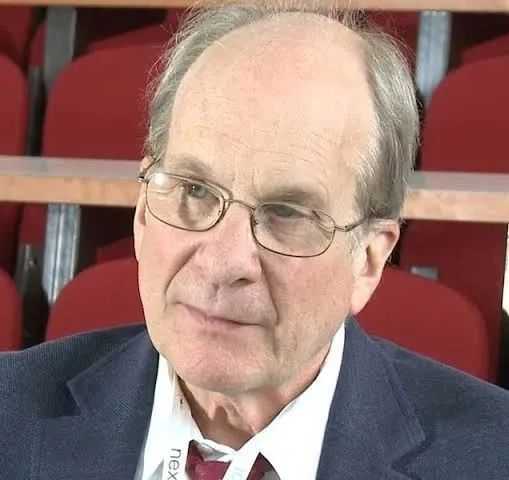
美國化學家,1943年出生於美國俄亥俄州,1969年獲美國紐約哥倫比亞大學博士學位。現任美國紐約哥倫比亞大學教授。1998年當選為美國藝術與科學院院士,2004年當選為美國國家科學院院士,並且是挪威科學與文學學院的成員。
Alexei Ekimov
俄羅斯固態物理學家
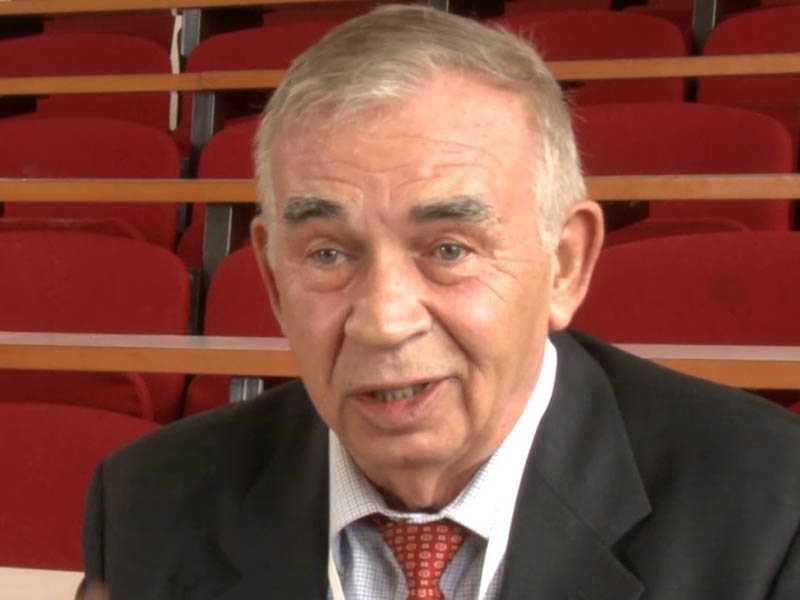
俄羅斯固態物理學家,在瓦維洛夫國立光學研究所工作時發現了被稱為量子點的半導體奈米晶體。1945 年出生於前蘇聯。1974 年獲得俄羅斯聖彼得堡 Ioffe 物理技術研究所博士學位。曾任美國紐約市 Nanocrystals Technology Inc. 首席科學家。他因在半導體電子自旋取向方面的工作而獲得1975 年蘇聯國家科學與工程獎。他是 2006 年美國光學學會RW Wood 獎的共同獲得者表彰「奈米晶體量子點的發現及其電子和光學特性的開創性研究」。
獲獎成果
They planted an important seed for nanotechnology
The Nobel Prize in Chemistry 2023 rewards the discovery and development of quantum dots, nanoparticles so tiny that their size determines their properties. These smallest components of nanotechnology now spread their light from televisions and LED lamps, and can also guide surgeons when they remove tumour tissue, among many other things.
Everyone who studies chemistry learns that an element’s properties are governed by how many electrons it has. However, when matter shrinks to nano-dimensions quantum phenomena arise; these are governed by the size of the matter. The Nobel Laureates in Chemistry 2023 have succeeded in producing particles so small that their properties are determined by quantum phenomena. The particles, which are called quantum dots, are now of great importance in nanotechnology.
「Quantum dots have many fascinating and unusual properties. Importantly, they have different colours depending on their size,」 says Johan Åqvist, Chair of the Nobel Committee for Chemistry.
Physicists had long known that in theory size-dependent quantum effects could arise in nanoparticles, but at that time it was almost impossible to sculpt in nanodimensions. Therefore, few people believed that this knowledge would be put to practical use.
However, in the early 1980s, Alexei Ekimov succeeded in creating size-dependent quantum effects in coloured glass. The colour came from nanoparticles of copper chloride and Ekimov demonstrated that the particle size affected the colour of the glass via quantum effects.
A few years later, Louis Brus was the first scientist in the world to prove size-dependent quantum effects in particles floating freely in a fluid.
In 1993, Moungi Bawendi revolutionised the chemical production of quantum dots, resulting in almost perfect particles. This high quality was necessary for them to be utilised in applications.
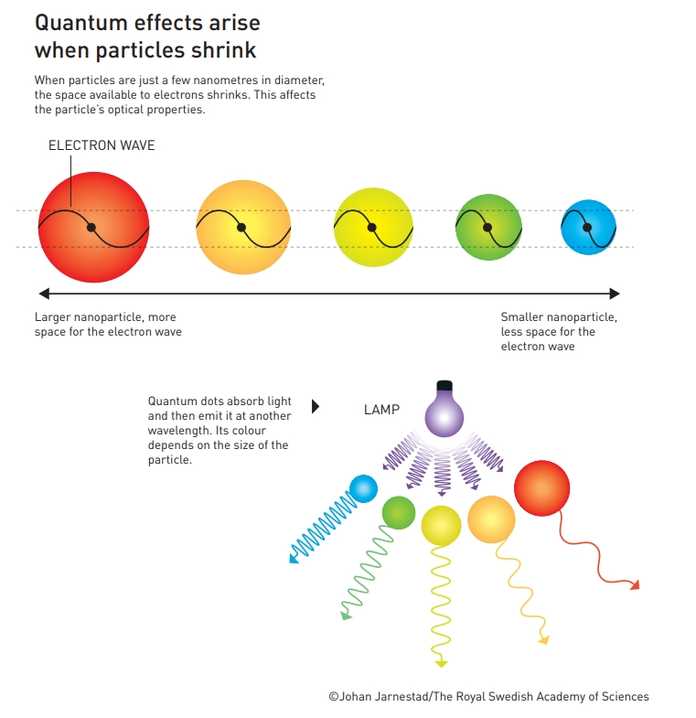
Quantum dots now illuminate computer monitors and television screens based on QLED technology. They also add nuance to the light of some LED lamps, and biochemists and doctors use them to map biological tissue.
Quantum dots are thus bringing the greatest benefit to humankind. Researchers believe that in the future they could contribute to flexible electronics, tiny sensors, thinner solar cells and encrypted quantum communication – so we have just started exploring the potential of these tiny particles.
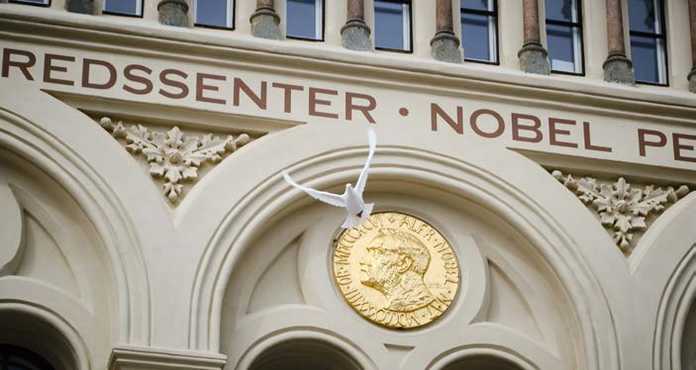
諾貝爾化學獎旨在獎勵那些在化學領域裡作出突出貢獻的科學家。自1901-2021年,諾貝爾化學獎已授予188位獲獎者,其中,弗雷德裡克·桑格(Frederick Sanger)是唯一一位獲得過兩次諾貝爾化學獎的人,分別在1958年和1980年。因此1901年以來共187人獲得諾貝爾化學獎,其中7位是女性。2022年諾貝爾化學獎的獲獎者為:Carolyn R. Bertozzi,Morten Meldal 和 K. Barry Sharpless,他們因「對點選化學和生物正交化學發展作出的貢獻」而獲獎。
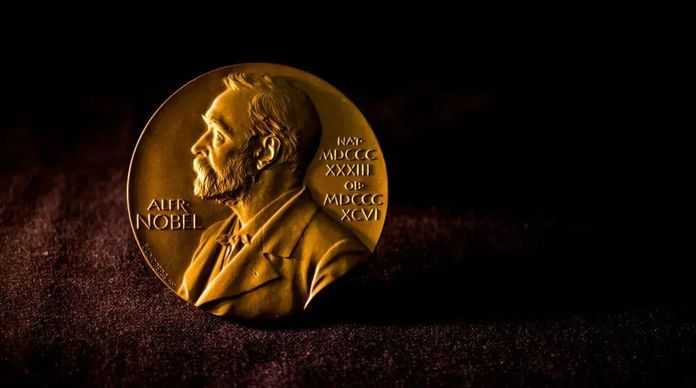
諾貝爾獎是以瑞典著名化學家、硝化甘油炸藥發明人阿爾弗雷德·貝恩哈德·諾貝爾的部分遺產作為基金創立的,諾貝爾獎包括金質獎章、證書和獎金支票。在遺囑中他提出,將部分遺產(920萬美元)作為基金,以其利息分設物理、化學、生理或醫學、文學及和平(後添加了‘經濟’獎)5種獎金,授予世界各國在這些領域對人類做出重大貢獻的學者。